Optical transmission hardware integration one-stop service provider

Views: 0 Author: Site Editor Publish Time: 2026-06-30 Origin: Site
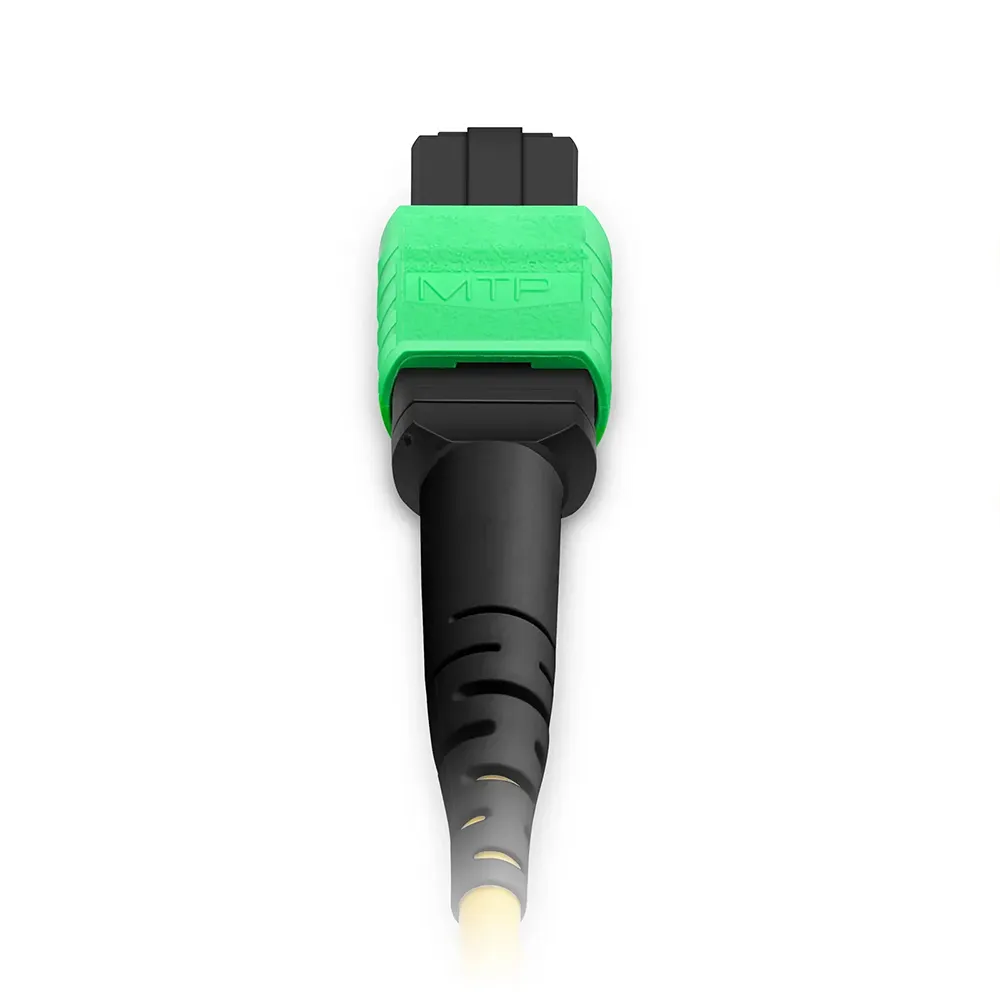
MTP-OS2: Utilizing OS2 single-mode fiber, these MTP patch cords typically feature a yellow outer jacket. They are engineered for long-distance, high-capacity data transmission.
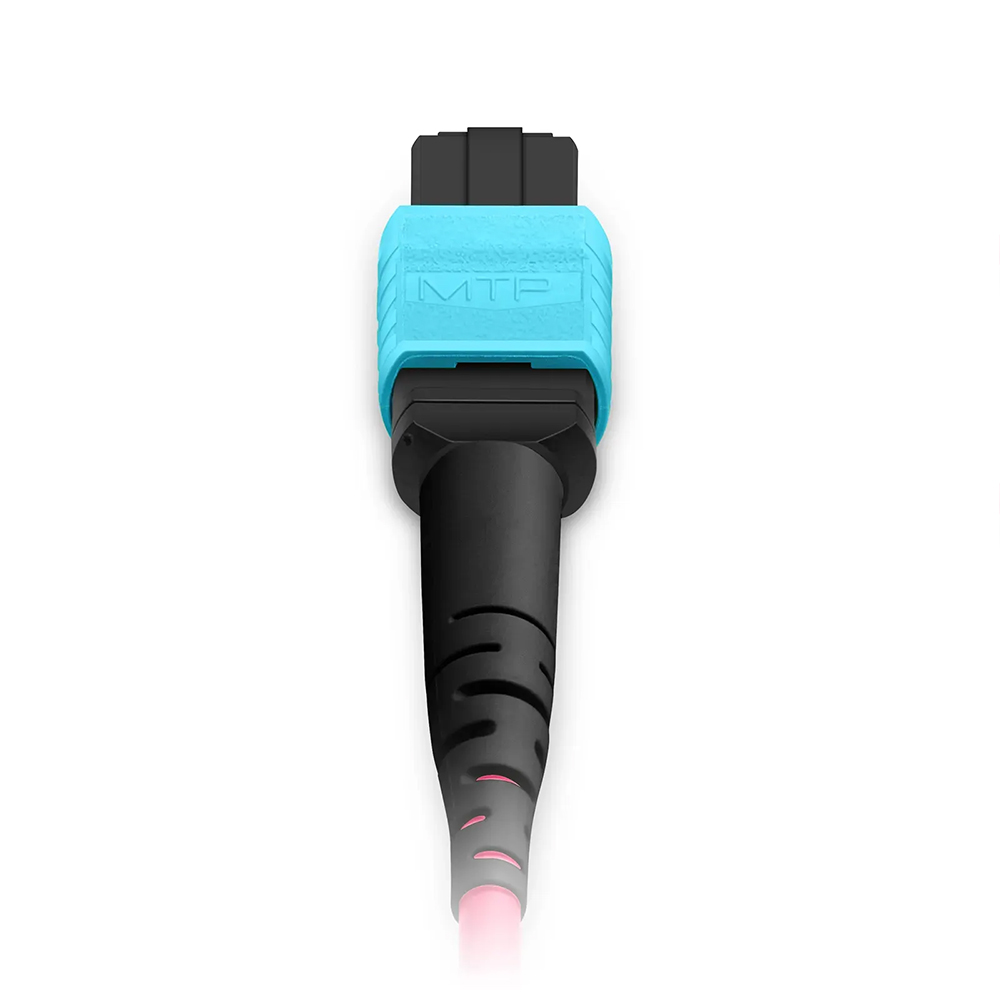
MTP-OM4: Utilizing OM4 laser-optimized multi-mode fiber, these MTP patch cords usually feature an aqua (or sometimes magenta) outer jacket. They serve as the standard for short-range, high-bandwidth connections inside data centers.
Feature | MTP-OS2 (Single-Mode) | MTP-OM4 (Multi-Mode) |
Core Diameter | 9 microns (µm) | 50 microns (µm) |
Light Source | Laser Diode (LD) | Vertical-Cavity Surface-Emitting Laser (VCSEL) |
Wavelength | 1310nm / 1550nm | 850nm / 1300nm |
Max Distance | 10 km to 40 km | Up to 150m at 40G/100G |
Attenuation Rate | Extremely Low (~0.4 dB/km) | Relatively High (~3.0 dB/km) |
Extreme Transmission Distance: Overcomes the distance limitations of multi-mode fiber, enabling cross-building and campus-wide links spanning kilometers.
Virtually Unlimited Bandwidth: Single-mode fiber suffers minimal modal dispersion, offering limitless potential bandwidth to support future 400G/800G upgrades.
Low Signal Loss: The light signal experiences minimal energy attenuation inside the core over long distances.
Higher Total System Cost: While the patch cords themselves are reasonably priced, the required single-mode transceivers (e.g., 40G/100G LR4) cost significantly more than multi-mode transceivers.
Strict Alignment Requirements: The tiny 9µm core demands precise alignment and strict cleanliness during installation and maintenance.
Lower Total System Cost: Paired with low-cost VCSELs and multi-mode transceivers (e.g., 40G/100G SR4), this option significantly reduces the overall network deployment budget.
Ideal for Short-Range High Density: Perfect for delivering high-density, high-throughput concurrent connections inside data centers under 150 meters.
Higher Alignment Tolerance: The 50µm core is easier to align during termination and installation compared to single-mode alternatives.
Limited Distance: As network speeds scale up to 400G and beyond, the effective transmission distance of OM4 shortens further.
Modal Dispersion: Different modes of light travel at varying speeds, causing potential signal distortion over longer distances.
Choose MTP-OM4 if: Your transmission distance is within 150 meters (e.g., intra-room rack-to-rack interconnects, main cross-connects to horizontal cross-connects) and your project budget is limited.
Choose MTP-OS2 if: You need inter-building connectivity, backbone infrastructure, or links exceeding 150 meters. Single-mode is also the definitive choice if you want to future-proof your network for eventual 800G scaling.