Optical transmission hardware integration one-stop service provider

Views: 2 Author: Tina Publish Time: 2025-12-30 Origin: Site
This article provides an in-depth analysis of the differences between GYFHKV outdoor armored fiber optic cables and standard outdoor armored cables, comparing aspects such as structure, protection, and application scenarios. It explains why GYFHKV cables are essential for harsh environments, offering professional guidance for selecting outdoor communication cabling.
In the construction of outdoor communication networks, armored fiber optic cables are critical components for withstanding complex environments and ensuring stable signal transmission. Among the various armored cable models, the GYFHKV Outdoor Armored Fiber Optic Cable stands out due to its unique structural design, making it the preferred choice for many demanding applications. How does it differ from conventional outdoor armored cables like GYTA or GYTS? Why is it more "necessary" in specific situations? This article will provide a clear and detailed analysis.

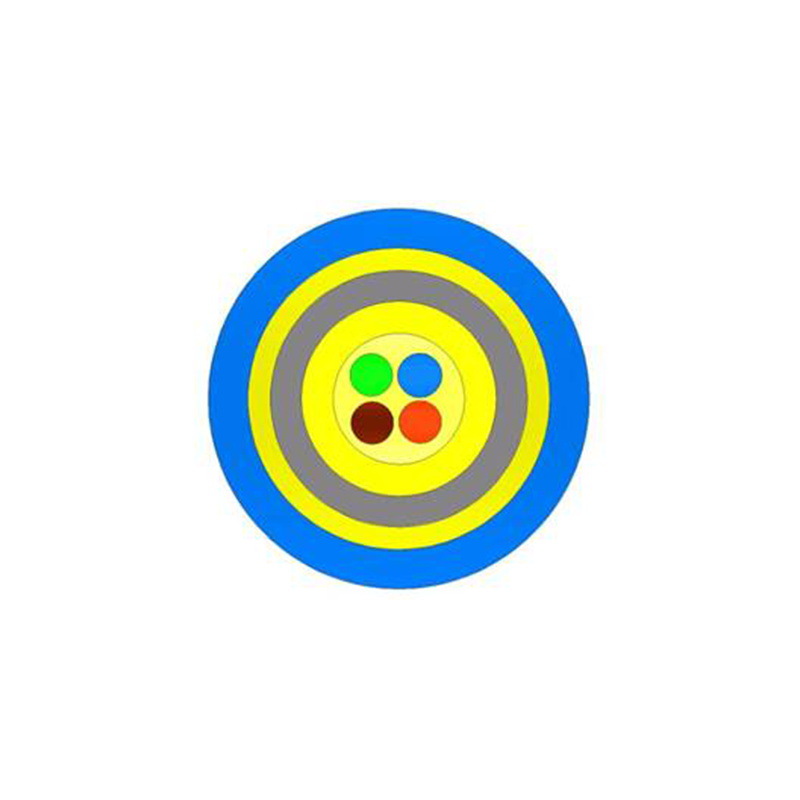
To understand its advantages, it's essential to first grasp the meaning behind its name and structure:
GY: Denotes telecommunications outdoor fiber optic cable.
F: Non-metallic strength member (typically aramid yarn).
H: Low Smoke Zero Halogen (LSZH) flame-retardant sheath.
K: Armor protection layer.
V: Polyvinyl Chloride (PVC) outer sheath (typically over the armor layer).
Comparison of Five Key Differences with Conventional Outdoor Armored Cables (e.g., GYTA/GYTS):
| Feature Dimension | GYFHKV Outdoor Armored Fiber Optic Cable | Conventional Outdoor Armored Cables (e.g., GYTA/GYTS) |
|---|---|---|
| 1. Armor Layer & Structure | Dual-layer protection: Typically "steel tape/wire armor + PVC outer sheath." The armor layer is covered by an additional sheath, providing better isolation. | Single exposed layer: Typically "armor layer (steel tape/wire) + Polyethylene (PE) sheath," with the armor layer closer to the outer sheath. |
| 2. Flame Retardancy & Safety | Core Advantage: Uses Low Smoke Zero Halogen (LSZH) materials. In case of fire, it produces very low smoke and releases no toxic halogenated gases, offering extremely high safety. | Typically uses standard Polyethylene (PE) sheathing, not emphasizing flame retardancy or only offering standard retardancy. May produce black smoke and toxic gases when burning. |
| 3. EMI Resistance | Due to the non-metallic strength member (aramid) and potential non-metallic armor options, it offers excellent Electromagnetic Interference (EMI) resistance, making it suitable for complex high-voltage electrical environments. | Metallic central strength member and metallic armor provide robustness but may be susceptible to interference in extreme electromagnetic environments (minimal impact on the optical signal itself, but lightning-induced currents should be considered). |
| 4. Application Focus | Harsh environments with safety requirements: Such as tunnels, subways, risers in high-rise buildings, substations, data center interconnects, chemical plants — scenarios requiring flame retardancy and low toxicity for indoor/outdoor transitions. | General-purpose outdoor environments: Such as long-haul trunk lines, aerial installation, direct burial in ducts, focusing on mechanical protection, moisture resistance, and rodent protection. |
| 5. Weight & Flexibility | The structure may be more complex and relatively heavier, but the aramid strength member provides good tensile strength and reasonable flexibility. | The structure is relatively simpler. Weight depends on the armor type. Flexibility is generally moderate. |
In the following scenarios, the advantages of GYFHKV are irreplaceable, making it the "more necessary" choice:
Enclosed and Populated Spaces Where Safety is Paramount
In tunnels, subways, and risers/ducts of commercial buildings, the burning characteristics of cable materials are crucial for evacuation and rescue in case of fire. The Low Smoke Zero Halogen (LSZH) property of GYFHKV minimizes the risk of suffocation from toxic smoke, complying with modern building safety codes.
Industrial Environments with Strong Electromagnetic Interference (EMI)
Near power plants, railway lines, and substations, strong electromagnetic fields exist. GYFHKV's design, featuring non-metallic strength members and an armored layer covered with a sheath, provides excellent insulation and EMI resistance, ensuring stable signal transmission and reducing the risk of lightning-induced currents damaging terminal equipment.
Critical Entry Points from Outdoor to Indoor
For base station access or core entry points for campus/enterprise networks (the "last mile"), the environment is often complex. GYFHKV combines the mechanical protection of outdoor armor (crush and rodent resistance) with the flame retardancy and safety requirements for indoor entry, allowing a single cable run, reducing splice points and failure risks.
Applications with Special Corrosion Resistance Requirements
The PVC outer sheath and its internal armor structure provide a longer service life and better protection in chemically corrosive or coastal environments with salty air, compared to some models with more exposed armor layers.
Mandatory Regulations and Standards
An increasing number of regions and countries have established clear legal requirements for the flame-retardant等级 of cables used in public facilities, transportation hubs, data centers, etc. Choosing products like GYFHKV, which comply with high flame-retardant standards (e.g., IEC 60332, IEC 61034), is essential for project compliance and successful inspection.
Selecting fiber optic cables is essentially about matching the most suitable protection scheme to a specific application environment. Conventional outdoor armored cables (e.g., GYTA/GYTS) are the "main force" for outdoor cabling, addressing general protection needs. The GYFHKV Outdoor Armored Fiber Optic Cable, however, is a "special forces" solution. While inheriting robust mechanical protection, it additionally enhances three key traits: flame retardancy/safety, environmental friendliness (low toxicity), and EMI resistance.
Therefore, when your cabling environment involves indoor/outdoor transitions, enclosed spaces, strong electromagnetic fields, or has stringent fire safety regulations, GYFHKV is no longer just an option but a necessary and superior solution. Through meticulous material and structural design, it not only ensures physical connectivity but also maximizes the safety and reliability of the network, building a solid line of defense for critical communication infrastructure.