Optical transmission hardware integration one-stop service provider

Views: 6 Author: Tina Publish Time: 2025-12-30 Origin: Site
In the construction of field communication networks, the choice of fiber optic cable directly impacts the stability and service life of the entire system. The GYTPU field armored single-mode fiber optic cable, specifically designed for harsh environments, differs fundamentally from conventional outdoor cables like GYTA and GYTS. This article systematically analyzes these differences and provides scientific selection guidance.
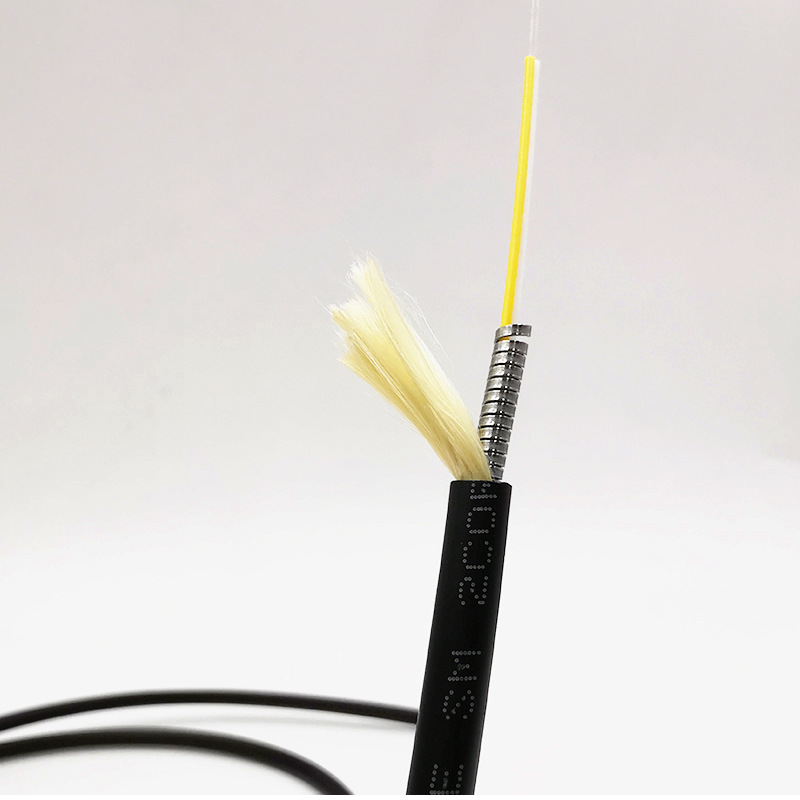
GYTPU Cable Nomenclature Breakdown:
GY: Telecommunication Outdoor Fiber Optic Cable
T: Filled Structure (filled with grease/thixotropic compound)
P: Protective Layer Structure
U: Polyurethane (PU) Outer Sheath
Structural Comparison with Conventional Outdoor Single-Mode Cables:
| Structural Layer | GYTPU Field Armored Cable | Ordinary GYTA / Loose Tube Cable | GYTA53 Double-Layer Armored Cable |
|---|---|---|---|
| Central Strength Member | High-strength phosphated steel wire | Single steel wire / FRP | Single steel wire |
| Fiber Unit | Grease-filled loose tube structure | Grease-filled loose tube structure | Grease-filled loose tube structure |
| Water Blocking | Full cross-section grease filling | Grease filling / dry core | Grease filling |
| Armor Layer | Double-layer chromium-plated steel tape, applied with gap | None / Single-layer steel tape | Double-layer longitudinally applied steel tape |
| Outer Sheath | Abrasion-resistant Polyurethane (PU) material | Ordinary Polyethylene (PE) | Polyethylene (PE) |
| Number of Protective Layers | 4-5 layers of professional protection | 2-3 layers of basic protection | 3-4 layers of protection |
GYTPU: Uses double-layer chromium-plated steel tape armor + PU sheath, crush resistance ≥ 3000N/10cm, capable of withstanding heavy machinery rolling and rock compression.
Ordinary Outdoor Cables: Typically non-armored or single-layer armored, crush resistance ≤ 1000N/10cm.
Impact: Risk of mechanical damage during field installation is reduced by over 70% with GYTPU.
Abrasion Resistance: The PU sheath of GYTPU is 3-5 times more wear-resistant than PE material, making it particularly suitable for pulling installation in rocky areas.
Protection against Biological Erosion: PU material contains rodent-repellent additives and effectively deters rodent gnawing through the addition of bittering agents.
Temperature Range: GYTPU operating temperature: -40°C to +70°C, wider than ordinary cables (-20°C to +60°C).
Chemical Corrosion Resistance: PU material is resistant to oil, acids, and alkalis, suitable for environments near mining areas and chemical plants.
GYTPU: Supports direct burial, duct, aerial, and underwater installation without requiring additional protection.
Ordinary Cables: Typically require selecting different models based on the installation method, offering poorer versatility.
Practical Application: In areas with complex terrain, GYTPU can reduce the number of splice closures used by 30%.
Waterproof Performance: GYTPU employs triple waterproofing: metal armor + water-blocking tape + grease, achieving an IP68 protection rating.
UV Resistance: PU material includes UV inhibitors, extending outdoor service life to over 25 years.
Maintenance Cost: In field environments, the failure rate of GYTPU is approximately 60% lower than that of ordinary cables.
Although the initial procurement cost of GYTPU is 30-50% higher than ordinary cables, considering comprehensively:
Reduced usage of protective conduits
Lowered installation complexity
Decreased maintenance frequency and failure-related losses
Extended replacement cycle (ordinary cables: 5-8 years, GYTPU: up to 15-20 years)
The Total Cost of Ownership (TCO) is actually lower.
Scenarios where GYTPU must be selected:
Field Military Communications: Requiring concealed installation, crush resistance, and rapid deployment.
Mining Area Communication Networks: Areas with frequent operation of heavy equipment.
Backbone Lines in Mountainous Areas: Complex terrain with potential rockfall risks.
Border Patrol Lines: Unattended operation requiring long-term reliability.
Disaster Emergency Communications: Rapid deployment in uncertain environments.
Scenarios suitable for ordinary outdoor cables:
Urban duct installation
Indoor-outdoor connection segments
Short-distance aerial lines
Campus networks in stable environments
Consider the following factors during selection:
Environmental Risk Assessment: Existence of mechanical damage, animal gnawing, chemical corrosion risks.
Installation Method: Need for compatibility with multiple installation methods.
Expected Service Life: Project-required lifespan.
Maintenance Accessibility: Ease of accessing the line for maintenance.
Total Budget Consideration: Consider not only procurement cost but also the full lifecycle cost.
Special attention is required when using GYTPU cables:
Minimum Bend Radius: 20 times the cable diameter during dynamic installation.
Maximum Tensile Load: Do not exceed 80% of the cable's tensile strength.
Splice Protection: The armor layer must be properly grounded.
Storage Conditions: Avoid direct sunlight and keep the packaging intact.
The GYTPU field armored single-mode fiber optic cable is not merely an upgraded version of ordinary outdoor cables but a specialized solution designed for extreme field conditions. Through features like multi-layer metal armor, special polyurethane sheath, and fully sealed structure, it achieves a protection level unattainable by ordinary cables.